
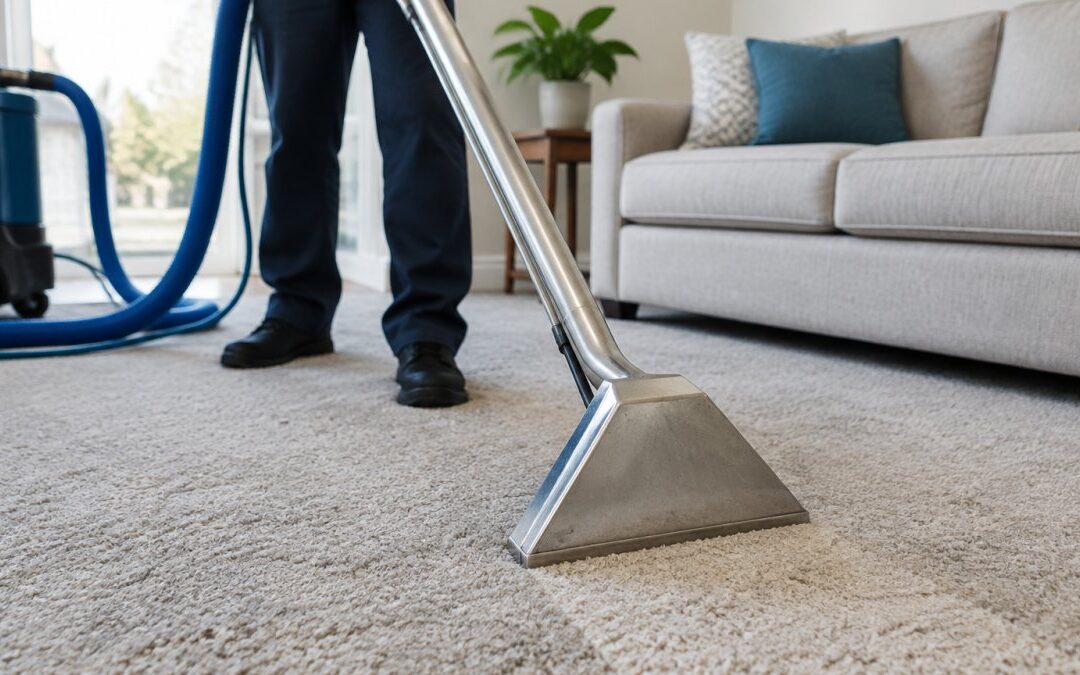
Last Updated: November 4, 2026
Quick Summary
Professional carpet cleaning is best for rental properties at move-out, move-in, and any unit with pet odor or stubborn stains, where a failed cleaning means a re-clean, delayed lease, or deposit dispute. DIY handles surface soil and rental machines handle moderate buildup, but professional service catches what a move-out inspection will find.
- DIY cleaning works for spills and light vacuuming but rarely fixes deep soil, pet odor, or traffic lanes.
- Rental machines typically dry in 12-24 hours, while professional service dries in 4-8 hours.
- Over-wetting is the most common rental-machine failure, leaving the pad damp for days.
- Book the turnover clean for day one of the vacancy, not the day before move-in.
- Photograph the carpet before and after cleaning and keep the receipt to protect both sides.
Table of Contents
- Comparing Carpet Cleaning Options for Rental Properties
- DIY Cleaning vs. Rental Machines vs. Professional Service
- Carpet Cleaner Rental: What Landlords Need to Know
- Professional Carpet Cleaning for Rental Properties: When It Pays Off
- How to Clean Carpet in a Rented Apartment: Tenant and Landlord Guide
- Carpet Cleaning Cost for Rental Properties: A Transparent Breakdown
- Turnover Timing, Drying, and Documentation
- Frequently Asked Questions
Comparing Carpet Cleaning Options for Rental Properties
Choosing the best carpet cleaning for rental properties comes down to three options: do it yourself with household supplies, rent a machine, or hire a professional service. Each one fits a different budget, timeline, and level of carpet damage, and picking wrong usually costs more than it saves.
At 5 Stones Carpet Cleaning, we see a consistent pattern in turnover work. The right method depends on how dirty the carpet is, how fast the unit needs to be ready, and what the lease requires. Below, we compare all three options on cost, results, and risk so you can make a call without guessing.
DIY cleaning is spot treatment and light vacuuming done by the tenant or owner using supplies on hand. It works for routine upkeep but rarely fixes deep soil, pet odor, or traffic lanes.
DIY Cleaning vs. Rental Machines vs. Professional Service
Here is the short answer: DIY handles surface soil, rental machines handle moderate buildup, and professional service handles everything a move-out inspection will catch. Most landlords need the third option at turnover, even if they use the first two in between.
| Option | Best For | Main Limitation | Time to Dry |
|---|---|---|---|
| DIY supplies | Spills, light vacuuming | No deep extraction | Hours |
| Rental machine | One room, light soil | Weak suction, user error | 12-24 hours |
| Professional service | Move-out, odor, pet stains | Higher upfront cost | 4-8 hours |
A common mistake is renting a machine for a heavily soiled unit and expecting move-out results. Rental units usually have weaker vacuum lift than truck-mount equipment, so water and dirt stay deeper in the pad.
Carpet Cleaner Rental: What Landlords Need to Know
Renting a carpet cleaner looks cheap until you add up the real cost. The sticker price is only the daily rate. You also pay for cleaning solution (often sold separately and priced per bottle), drive time to and from the rental counter, and your own labor running pass after pass over the same traffic lane. Most rental units hold small tanks, so a single bedroom can mean multiple refill and dump trips.
A transparent way to compare rental against other options is to total five line items: machine rental, solution and pretreatment, your labor hours, travel, and the likelihood of a repeat treatment. If the carpet is lightly soiled and you have one small room, a rental machine can pencil out. If the unit is a full turnover with pet odor or heavy traffic lanes, the repeat-treatment risk usually erases the savings.
Machine choice matters more than most landlords expect. Consumer-grade rental units typically deliver weaker vacuum lift and lower solution temperature than truck-mount equipment, so water and suspended soil stay deeper in the backing and pad.
Watch out: over-wetting is the most common rental-machine failure. Too much water and too little extraction leaves the pad damp for days, and damp carpet grows odor fast. Run dry passes until the recovery tank stops pulling visible water, and keep the wand moving rather than dwelling in one spot.
Before you rent, check the lease and any building rules. Some leases assign deep cleaning to the landlord at turnover, and some buildings restrict equipment that discharges wastewater. If you are weighing rental against hiring help, our guide on how to find reliable carpet cleaners in Albuquerque covers what to ask before you book.
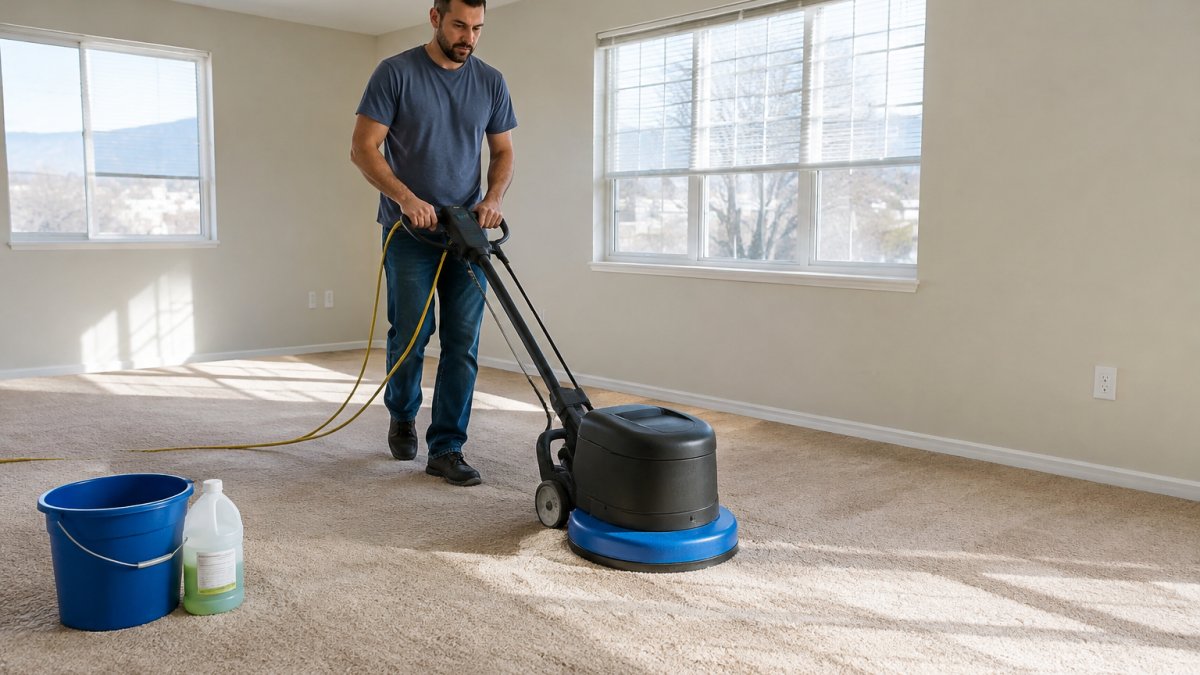
The man is American.
Professional Carpet Cleaning for Rental Properties: When It Pays Off
Hiring a pro pays off at three moments: move-out, move-in, and any unit with pet odor or stubborn stains. Those are the situations where a failed cleaning means a re-clean, a delayed lease, or a deposit dispute.
Professional cleaning for rental properties brings trained technicians, and people and pet-safe products. That combination matters in units with pets, where urine has soaked into the pad and surface cleaning will not reach it. It also matters when a tenant with allergies moves in and expects a genuinely clean unit.
Our carpet cleaning services can help with turnover work.
How to Clean Carpet in a Rented Apartment: Tenant and Landlord Guide
Tenants and landlords split this job, and knowing who does what prevents arguments at move-out. Tenants handle routine vacuuming, spot treatment, and reporting damage. Landlords handle deep cleaning at turnover and any repair beyond normal wear.
For tenants, the basics work well:
- Vacuum high-traffic areas twice a week
- Blot spills immediately with a clean cloth, never rub
- Use a mild vinegar and water mix on fresh spots, then blot dry
- Skip baking soda scrubbing on wool or delicate carpet
- Report pet accidents early so odor does not set in
A room-by-room schedule helps both sides plan. Our guide on how often to clean your carpets breaks down frequency by room and traffic level.
Carpet Cleaning Cost for Rental Properties: A Transparent Breakdown
Carpet cleaning cost for rental properties depends on quantity of rooms, soil level, pet treatment, and scheduling. We offer free estimates, and you can review current pricing on our website or request a quote.
What Drives the Price Up or Down
Pricing depends on quantity, timing, and the services requested. For current prices or a quote, see our pricing page on the 5 Stones Carpet Cleaning website.
Once you have a clear number, the next step is easy. You can contact our team for a quote or to schedule a turnover clean.
Turnover Timing, Drying, and Documentation
Turnover cleaning works best when it happens right after the old tenant moves out and before the new one moves in. Book the clean for day one of the vacancy, not the day before move-in. Drying takes time, and rushing it traps moisture.
A practical move-out-to-move-in timeline looks like this. On move-out day, do a walkthrough with the tenant, photograph every room, and note pre-existing damage in writing. On day one of vacancy, schedule the deep clean so extraction and any pet or odor treatment happen first. Allow a full drying window after professional extraction before furniture goes back or the unit is shown. Keep windows open or run fans and the HVAC fan to move air, and avoid walking on damp carpet in shoes. Schedule the move-in inspection after the carpet is dry to the touch, not just dry on the surface.
Documentation protects both sides. Photograph the carpet before and after cleaning, keep the receipt, and note any pre-existing damage in writing. Distinguish ordinary wear from damage, and check your lease and applicable local rules on cleaning fees and deposit deductions before you withhold anything, because requirements vary.
If pet stains are involved, our guide on removing old pet urine smells from carpet explains why surface cleaning fails and what actually works. Build the drying window into the lease turnover calendar so a damp carpet never meets a new occupant.
Frequently Asked Questions
How often should landlords clean carpets between tenants?
Most rental property owners schedule deep carpet cleaning at every move-out, and many add an annual cleaning for long-term tenants. High-traffic units with pets or children may need cleaning every six to twelve months. Regular vacuuming and prompt spot treatment between professional visits extend carpet life and reduce replacement costs.
Is it better to rent a carpet cleaner or hire a professional?
Rental machines cost less upfront, but they often leave more moisture and require your time for setup, cleaning, and returns. Professional carpet cleaning for rental properties includes trained technicians and stronger extraction. For turnover deadlines or stubborn pet odors, a professional service usually delivers better results in one visit.
How long does carpet take to dry after cleaning?
Professional deep cleaning leaves carpets damp for a period that depends on humidity and airflow. Rental machines can leave carpets wetter for longer. To speed drying, run fans, open windows, and keep the HVAC system on. Plan turnover schedules so carpets dry before new tenants move in.
What is the average cost of renting a carpet cleaner?
Carpet cleaner rental costs vary by provider, plus cleaning solution and travel. Professional carpet cleaning cost for rental properties varies by square footage, carpet condition, and add-on services. Request a free estimate from a local provider to compare total costs accurately.
Rental carpet cleaning gets messy when timing, cost, and responsibility are unclear. 5 Stones Carpet Cleaning takes the guesswork out with free estimates, people and pet-safe products, and a satisfaction guarantee on every job. We are family owned, faith based, and responsive enough to handle same-day and next-day turnover requests. Get started with 5 Stones Carpet Cleaning and hand off the dirty work before your next tenant walks in.
