
Last Updated: October 28, 2026
Quick Summary
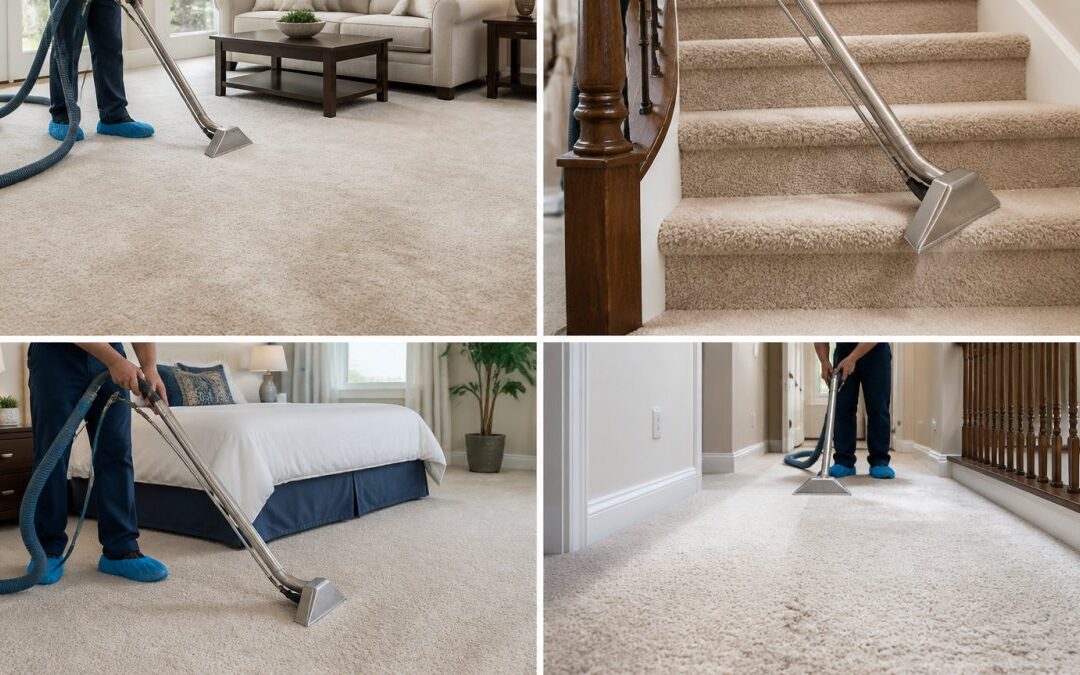
The short answer to how often should you clean your carpets is every 12 to 18 months for a typical household, with professional hot water extraction on that cadence and vacuuming weekly in between. Homes with pets, kids, or heavy foot traffic should shorten that window to every 6 to 12 months.
- Vacuum high-traffic areas two to three times per week and medium-traffic rooms weekly.
- Pet households should book professional cleaning every 6 months and vacuum 2-3 times weekly.
- Low-traffic rooms like guest rooms need professional cleaning every 18-24 months with regular vacuuming.
- Wool carpets often need 12 to 24 hours of drying with airflow after cleaning.
- Call for cleaning sooner if you notice dark traffic lanes, musty smells, or matted pile.
Table of Contents
- The Short Answer: How Often Should You Clean Your Carpets?
- What Actually Decides How Often to Clean Carpets
- How Often to Vacuum Carpet at Each Traffic Level
- Professional Carpet Cleaning Frequency by Household Type
- Carpet Cleaning for Pets: Why Pet Homes Need a Different Schedule
- Carpet Material and Pile Type: One Schedule Does Not Fit All
- Allergens, Indoor Air Quality, and Why Timing Matters
- Carpet Cleaning Cost: What Drives the Price of a Cleaning
- Carpet Warranty Rules Most Homeowners Never Read
- Signs Your Carpet Needs Cleaning Before the Schedule Says So
- Frequently Asked Questions
The Short Answer: How Often Should You Clean Your Carpets?
The short answer to how often should you clean your carpets is every 12 to 18 months for a typical household, with professional hot water extraction on that cadence and vacuuming weekly in between. Homes with pets, kids, or heavy foot traffic should shorten that window to every 6 to 12 months. The rest of this guide breaks those conditions down room by room.
Carpet is a filter. It traps soil, pet dander, and dust mites that would otherwise circulate through the air you breathe. The EPA’s indoor air quality guidance notes that carpets can act as a reservoir for pollutants when they are not cleaned regularly, which is why timing beats guesswork.
Below, we’ll discuss factors that can affect a cleaning schedule.
What Actually Decides How Often to Clean Carpets
Cleaning frequency is a function of soil load, not square footage. Four variables drive it: how many people live in the home, how much traffic each room sees, what kind of carpet you have, and whether pets share the space. Get those right and the schedule writes itself.
Household Size, Occupancy, and Carpet Wear
Every additional resident adds foot traffic, skin cells, and tracked-in soil. A two-person household with a shoes-off policy can stretch professional cleanings toward the 18-month mark. A family of five with a mudroom that never gets used should plan on annual deep cleaning. Occupancy also affects vacuuming frequency: busier homes need two passes a week, not one.
High-Traffic Areas vs. Low-Traffic Zones
Not every room deserves the same treatment. Traffic lanes, the paths feet actually follow, collect soil far faster than the edges of a room. A common mistake is cleaning the whole house on one schedule while the living room and hallway quietly degrade.
- High-traffic: entryways, hallways, living rooms, stairs. Clean professionally every 6-12 months.
- Medium-traffic: bedrooms, dining rooms. Every 12 months.
- Low-traffic: guest rooms, formal spaces. Every 18-24 months with regular vacuuming.
How Often to Vacuum Carpet at Each Traffic Level
Vacuuming frequency is the cheapest lever you control, and most homeowners underuse it. The general rule: vacuum high-traffic areas two to three times per week, medium-traffic rooms weekly, and low-traffic rooms every other week. Soil that sits in the carpet pile abrades fibers every time someone walks on it.
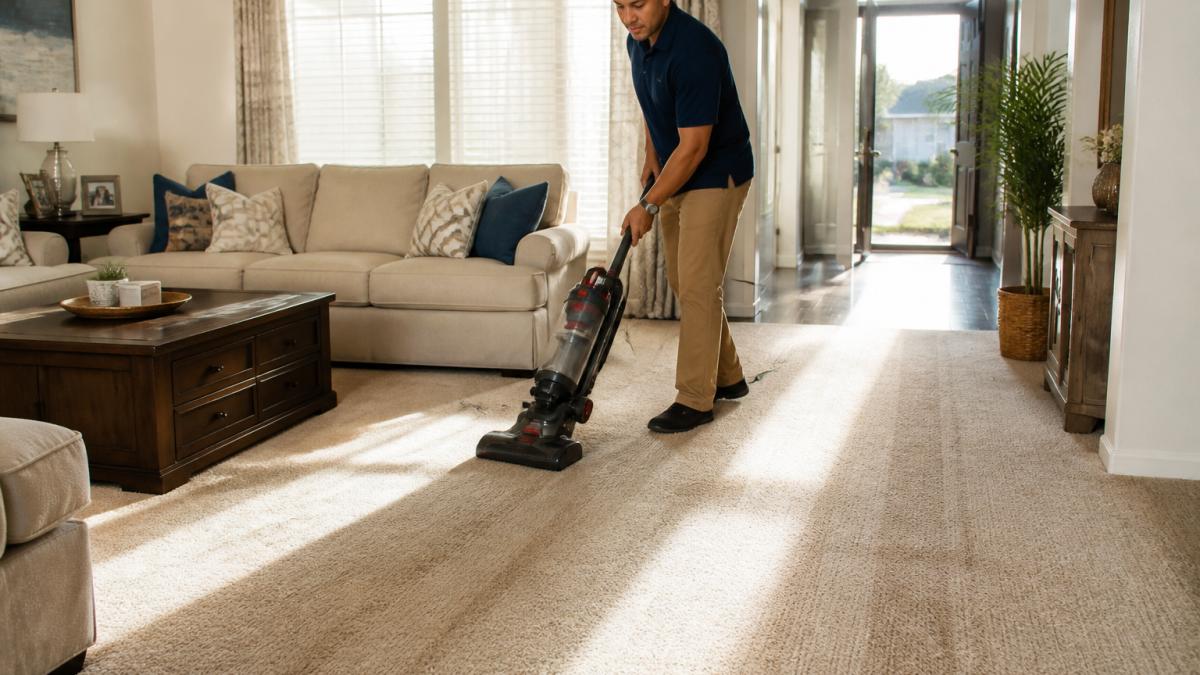
Slow passes matter more than extra passes. Pushing a vacuum quickly over the surface lifts almost nothing.
Professional Carpet Cleaning Frequency by Household Type
Professional carpet cleaning frequency should match the household, not a generic calendar reminder. Here is how we would set the schedule:
| Household Type | Professional Cleaning | Vacuuming | Key Reason |
|---|---|---|---|
| Single adult, no pets | Every 18 months | Weekly | Low soil load |
| Couple, shoes-off policy | Every 12-18 months | Weekly | Moderate traffic |
| Family with kids | Every 6-12 months | 2x weekly | Spills, tracked soil |
| Pet household | Every 6 months | 2-3x weekly | Dander, accidents |
| Rental turnover | Between tenants | Before move-in | Hygiene, deposits |
If you are unsure where your home falls, contact our team.
Carpet Cleaning for Pets: Why Pet Homes Need a Different Schedule
We use people and pet-safe cleaning products, which matters if your dog or cat has reactions to residue left by harsh agents. We also offer upholstery cleaning for couches, chairs, and mattresses.
Carpet Material and Pile Type: One Schedule Does Not Fit All
Most guides give you one schedule and move on. That advice breaks down the moment you compare a plush nylon bedroom carpet to a looped wool rug in a hallway.
Synthetic Fibers: Nylon, Polyester, and Triexta
- Nylon is the most resilient common fiber. It resists matting and springs back well, which means it can handle hot water extraction on a 12-month professional cadence in average homes and every 6-12 months in pet or kid households. Nylon accepts most cleaning agents, but repeated over-wetting can dull the finish, so proper drying matters.
- Polyester is softer and more stain-resistant than nylon but less resilient under foot traffic. It shows crushing in traffic lanes sooner, so vacuuming frequency matters more than deep-cleaning frequency. Plan on professional cleaning every 12 months and consider a fiber-protectant application after each visit.
- Triexta (PTT) sits between the two: strong stain resistance, good resilience, and tolerant of hot water extraction. A 12-18 month professional cadence fits typical homes, shortened to 6-12 months with pets.
Natural Fibers: Wool and Wool Blends
- Wool absorbs and releases moisture slowly, so it needs longer drying windows, often 12 to 24 hours with airflow, and it can shrink, felt, or brown if over-wetted. Professional cleaning every 12-18 months is typical, but the method matters more than the calendar: low-moisture encapsulation or wool-safe extraction by a technician trained on natural fibers is safer than high-pressure hot water extraction.
- Wool blends behave like their dominant fiber but with less margin for error. Check the manufacturer’s care tag before booking; some blends specify dry or low-moisture methods only.
Pile Height and Construction Change the Schedule Too
- Plush and high-pile (frieze, saxony): Deep pile traps soil below the surface where a quick vacuum pass never reaches. These carpets need slower vacuum passes with the beater bar adjusted so it agitates without matting, and they benefit from professional extraction on the shorter end of the fiber’s range.
- Loop and level-loop (Berber): Dense and crush-resistant, but loop pile shows traffic lanes and snags easily. Avoid beater bars that catch loops; suction-only or gentle agitation is safer. Professional cleaning every 12-18 months is typical.
- Cut-and-loop: The mixed construction means uneven wear, the cut portions mat while the loops stay upright. Vacuum with a height setting that clears the tallest tuft.
A Material-First Rule of Thumb
If you remember one thing, make it this: match the method to the fiber before you match the calendar to the room. Synthetics tolerate hot water extraction and shorter intervals; wool and wool blends need gentler methods and longer drying. When in doubt, the manufacturer’s care tag outranks any generic schedule, including the one in this guide.
Allergens, Indoor Air Quality, and Why Timing Matters
Allergen buildup is the strongest argument for cleaning on schedule rather than waiting for visible dirt. Dust mites, pet dander, and fine dirt particles settle into carpet fibers and become airborne with every step. Households with allergy sufferers should lean toward the shorter end of every range in this guide. Proper drying time after cleaning, usually 6 to 12 hours with good airflow, prevents moisture from creating a new problem.
Carpet Cleaning Cost: What Drives the Price of a Cleaning
We offer competitive pricing and free estimates. You can browse our cleaning services.
Carpet Warranty Rules Most Homeowners Never Read
Carpet warranties are not maintenance contracts, and they are not automatic. They are conditional promises, and the conditions are spelled out in documents almost no homeowner reads. Understanding them is the difference between a covered claim and a denial years later.
What Carpet Warranties Actually Cover
Most residential carpet warranties bundle several separate guarantees, each with its own terms:
- Wear warranty: Covers fiber loss from normal foot traffic, usually for a set number of years. It does not cover matting and crushing, which are typically addressed by a separate, shorter “texture retention” or “appearance retention” warranty.
- Stain warranty: Covers stains from common household substances, but almost always excludes stains from substances the manufacturer lists as non-covered (bleach, certain dyes, some pet waste) and requires prompt spot cleaning.
- Manufacturing defect warranty: Covers backing separation, delamination, and similar defects, not wear or staining.
- Installation warranty: Often separate and tied to the installer rather than the manufacturer.
Read each one separately. A carpet can be fully covered for wear and completely excluded for the stain you actually care about.
The Maintenance Conditions That Void Claims
This is where most claims die. Manufacturers commonly require:
- Professional hot water extraction at a stated interval. Many warranties specify professional cleaning every 12 to 18 months, and some require it more often in high-traffic homes. The exact interval is in your warranty document, not on a generic blog.
- Qualified or approved providers. Some warranties require cleaning by a technician trained or certified under a recognized program, or by a provider using methods the manufacturer approves. Keep the invoice showing the method used.
- Regular vacuuming. Warranties typically require vacuuming consistent with the manufacturer’s care guide. You will not be asked to prove it, but neglect can be cited in a denial.
- Prompt spot treatment. Stain warranties usually require blotting and approved spot cleaners within a reasonable window. Waiting weeks to address a spill can void coverage for that stain.
- Proper installation. Claims can be denied if the carpet was installed over an inadequate pad or subfloor, or without the manufacturer’s recommended underlayment.
Keep This Paper Trail
If you ever file a claim, the burden of proof is on you. Keep:
- The original sales receipt and warranty document, including any registration confirmation.
- Every professional cleaning invoice, with the date, method (hot water extraction, low-moisture, etc.), and provider name.
- Photos of the affected area and a record of when you first noticed the problem.
- Receipts for approved spot cleaners if a stain claim is involved.
A folder, physical or digital, with those four items is the difference between a smooth claim and a fight.
How Claims Get Denied in Practice
The most common denial patterns are predictable: no proof of professional cleaning, cleaning at intervals longer than the warranty requires, use of a method the manufacturer excludes (some wool and natural-fiber warranties restrict high-moisture methods), and stains from non-covered substances. A denial is rarely about the carpet failing; it is usually about the homeowner not meeting a condition they never knew existed.
Warranty terms vary by manufacturer and product line, and they change over time. The document that came with your carpet is the only authoritative source. If you cannot find it, contact the retailer or manufacturer before assuming your cleaning schedule satisfies the warranty.
What This Means for Your Schedule
Treat the warranty interval as a floor, not a ceiling. If your warranty requires professional cleaning every 12-18 months, do not stretch to 24 because the carpet still looks fine, you are gambling with coverage. If your household has pets or kids, clean on the shorter end of the range and keep every invoice. Our experience since 2012 means we document each visit with the date, method, and provider details manufacturers ask for, so your paper trail is ready if you ever need it.
Find your warranty document this week. Note the required cleaning interval and any method restrictions, then set a calendar reminder one month before the deadline. That single habit protects the largest flooring investment in most homes.
Signs Your Carpet Needs Cleaning Before the Schedule Says So
The calendar is a guide, not a rule. Call for cleaning sooner if you notice dark traffic lanes that vacuuming no longer lifts, a musty smell, matted pile, or increased allergy symptoms indoors. Visible spots that return after cleaning usually mean soil reached the pad. Trust those signals over the schedule.
Frequently Asked Questions
How often should I get my carpets professionally cleaned?
Most carpet manufacturers recommend professional cleaning every 12 to 18 months for a typical household. Bump that up to every 6 to 12 months if you have pets, children, allergies, or heavy foot traffic. Homes with smokers or multiple pets often need quarterly service. Check your carpet warranty first, because many require a set professional cleaning frequency to stay valid, and keep receipts as proof.
How often should you vacuum your carpets between professional cleanings?
Vacuum high-traffic areas like hallways and living rooms at least twice a week, and weekly in low-traffic bedrooms. Homes with pets should vacuum every other day because pet dander and soil accumulation build fast in carpet fibers. Use slow, overlapping passes and empty the canister when it is two-thirds full. Vacuuming frequency is the cheapest way to extend carpet longevity between deep cleanings.
How often should you clean carpets if you have pets?
Plan on professional carpet cleaning every 6 to 12 months in a pet home, and spot clean accidents the same day. Urine soaks into the backing and pad, so surface cleaning will not remove the odor. Tell your cleaner about pets before the visit so they can use pet-safe products and treat affected areas. Regular deep cleaning with hot water extraction removes pet dander and keeps odors from settling into traffic lanes.
How much does professional carpet cleaning cost?
Carpet cleaning cost depends on square footage, carpet condition, pet treatment, furniture moving, and how many rooms or staircases you need. Most providers price per room or per square foot and add charges for heavy soil or odor treatment. Ask for a written estimate before booking and confirm what it includes. 5 Stones Carpet Cleaning offers free estimates, so you can see the price before you commit.
Why does my carpet look dirtier after shampooing?
Shampooing can leave cleaning solution residue in the carpet pile if it is not rinsed out properly. That sticky film attracts dirt particles, so the carpet looks dull or dark within days. Hot water extraction, often called steam cleaning, flushes out both soil and residue. If you clean yourself, use less solution than the label suggests and rinse thoroughly. Professional extraction avoids the residue problem entirely.
How long does carpet take to dry after professional cleaning?
Most carpets dry in 6 to 12 hours with good airflow, though dense or high-pile carpet can take up to 24 hours. Run ceiling fans, open windows if weather allows, and keep the HVAC running. Avoid walking on the carpet in shoes until it is fully dry. A cleaner using professional extraction equipment removes more water, which shortens drying time and reduces the risk of mildew.
Is old carpet unhealthy to keep?
Carpet older than 10 to 15 years can trap dust mites, pet dander, and allergen buildup deep in the backing and pad, even with regular vacuuming. If cleaning no longer improves the look or smell, or if the pile is worn through in traffic lanes, replacement may be the better choice. Have a professional assess it first. Deep cleaning can often restore a carpet that still has life left.
Your carpet will tell you when it needs attention, but only if you know what to look for. If any of the signs above sound familiar, do not wait for the calendar to catch up. 5 Stones Carpet Cleaning offers free estimates, people and pet-safe products, and a satisfaction guarantee on every job. Get started with 5 Stones Carpet Cleaning and put your home on a cleaning schedule that actually fits how you live.
