
Quick Summary
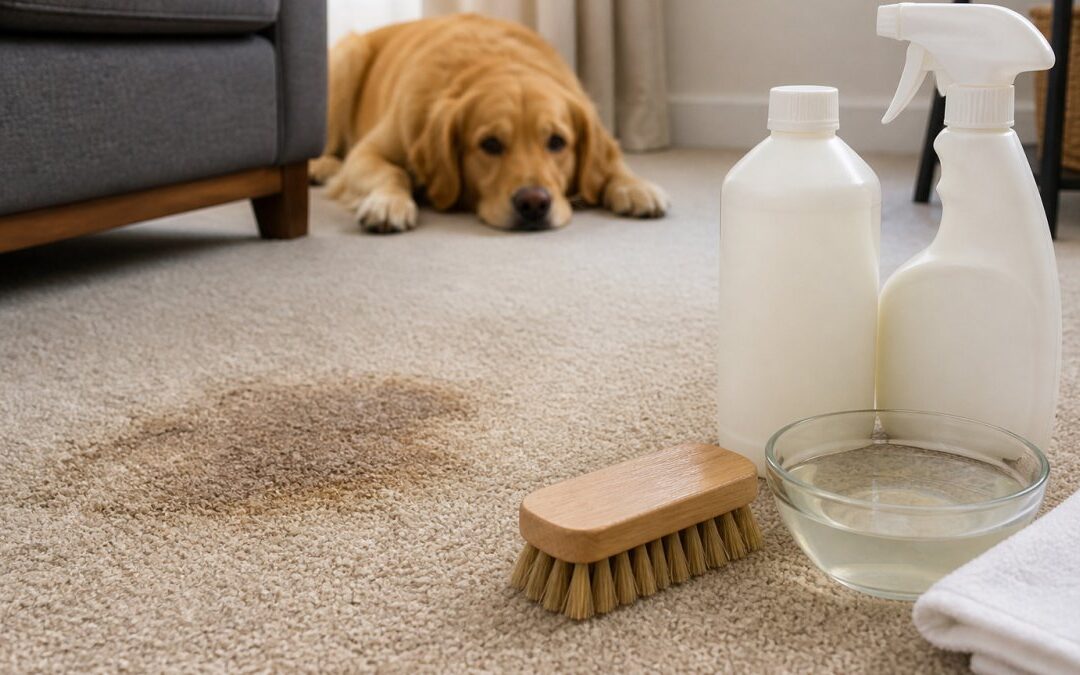
To remove old pet urine smell from carpet, first locate every dried spot, then blot and rinse the surface and saturate the area with an enzyme cleaner so it reaches the same depth the urine did. If the odor persists after a full dry cycle, the urine has likely soaked into the padding or subfloor and needs replacing or professional treatment.
- Old pet urine odor is a depth problem, so surface cleaning alone won’t fix it.
- Use a UV light in a dim room, but confirm spots by smell because some false positives occur.
- Choose an enzyme cleaner made for pet urine and never mix it with vinegar or bleach.
- Let the carpet dry completely before judging the result or walking on it.
- Replace contaminated padding if odor returns after a second full treatment cycle.
Table of Contents
- Why Old Pet Urine Smell Lingers in Carpet
- How to Find Dried Urine Stains in Carpet
- Step-by-Step: Removing Old Pet Urine Odor From Carpet
- Why Carpet Smells Like Urine After Cleaning
- When to Call a Professional for Pet Urine Odor Removal
- Booking Your Pet Urine Cleanup With 5 Stones
- Frequently Asked Questions
Why Old Pet Urine Smell Lingers in Carpet
Last Updated: October 30, 2026
Old pet urine smell is one of the hardest odors to beat.
The reason is simple. Urine soaks past the carpet fibers and into the padding and sometimes the subfloor. Surface cleaning removes what you can see, but the crystals and bacteria underneath keep producing odor.
Urine also leaves salts behind as it dries. Those salts pull moisture from the air, which is why the smell can return on humid days.
- Urine travels down into carpet padding and subfloor
- Dried salts hold odor-causing residue
- Humidity wakes the smell back up
How to Find Dried Urine Stains in Carpet
Dried urine stains are often invisible under normal light. A quick glance will miss most of them, especially if the accident happened weeks or months ago and the surface was already cleaned. Finding every deposit before you treat is the difference between fixing the odor and chasing it.
Inspect the Room Systematically
Work one room at a time and move in a fixed pattern so you do not miss spots:
- Clear the floor of loose items, pet beds, and toys.
- Start at the doorway and walk the perimeter, checking the carpet along every baseboard.
- Check under and behind furniture, pets often mark the same hidden corner repeatedly.
- Inspect carpet edges, transitions to hard flooring, and the area around any floor vents.
- Mark every suspect spot with painter’s tape so you can return to it after treatment.
Pay special attention to corners, the foot of any door, and the spots where a pet bed or crate sat. Those are the most common repeat locations.
Use a UV Light Carefully
A UV flashlight (often sold as a blacklight) makes dried urine salts fluoresce, but it is a tool with real limitations:
- Dim the room first. Ambient light washes out the glow. Close blinds and turn off overhead lights.
- Hold the light low and at an angle. Raking light across the carpet reveals marks better than pointing straight down.
- Expect yellow, white, or greenish glow. Fresh or old urine can appear in any of these tones.
Sniff low and slow near baseboards and under furniture. Your nose often finds deposits a UV light misses, especially in padding that has been cleaned before.
Distinguish Surface Stains From Deep Contamination
Not every spot you find is a surface problem. Press a clean white towel firmly onto the spot and hold it for 30 seconds. If moisture or a strong odor transfers to the towel, the urine has likely reached the padding.
Mark each spot with painter’s tape so you can find it later. Many people miss the spots next to walls and under furniture, so check those areas carefully.
Step-by-Step: Removing Old Pet Urine Odor From Carpet
Old urine takes more work than a fresh accident. The steps below are ordered so each one builds on the last, and they assume the spot has already been located and marked. If you have not found the spots yet, do that first.
Step 1: Blot and Rinse the Surface
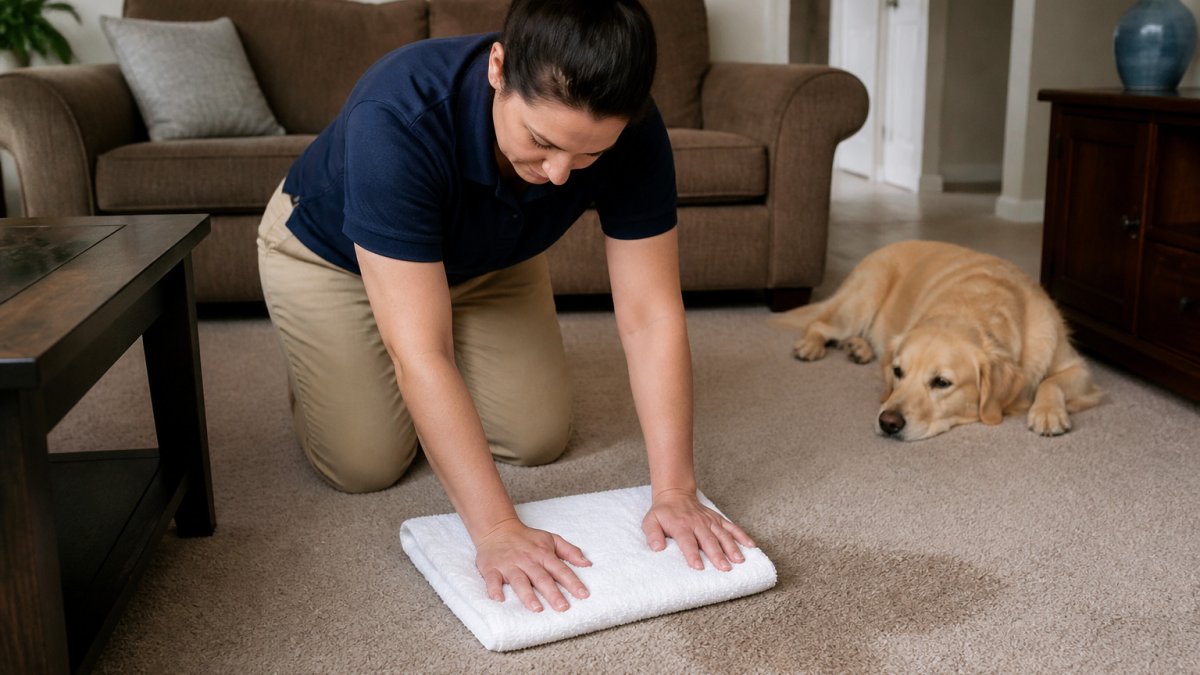
Start by blotting, not scrubbing. Scrubbing pushes urine deeper and can fray carpet fibers.
- Press a thick towel onto the spot and stand on it for 30 seconds to absorb moisture.
- Mix equal parts white vinegar and warm water, or use a mild, non-bleach dishwashing detergent solution.
- Apply the solution lightly and let it sit for five minutes.
- Blot again with a clean rag until no more liquid comes up.
- Rinse the area with plain water and blot dry.
Test any cleaner on a hidden corner first. Some dyes and fibers can react badly to vinegar or detergent.
Step 2: Apply an Enzyme Cleaner at the Right Depth
An enzyme cleaner breaks down the urine compounds that cause odor. Vinegar and detergent alone usually cannot reach them.
- Choose an enzyme cleaner made for pet urine.
- Saturate, do not just spray. The cleaner must reach the same depth the urine reached. Apply enough that the area is visibly wet, then press down with a clean towel to work it into the backing.
- Let it sit for the time listed on the label, often several hours, sometimes overnight.
Do not mix enzyme cleaners with vinegar, bleach, or other household cleaners. Mixing can kill the enzymes or create irritating fumes. Use one product at a time and rinse between treatments.
Step 3: Address Padding and Subfloor Contamination
If the odor persists after a full enzyme treatment and dry time, the urine has likely soaked into the padding or subfloor. Surface cleaning cannot fix that.
- Lift a corner of the carpet near the spot (a professional can do this without damaging the stretch).
- Inspect the padding. Discoloration, stiffness, or a strong odor means the padding is contaminated.
- Replace contaminated padding. Padding is inexpensive and often cannot be fully cleaned. Cut out the affected section and replace it with matching padding.
- Seal the subfloor if needed. For concrete or wood subfloor, a stain-blocking sealer may be required after cleaning and drying.
This is the point where many do-it-yourself attempts stall. If you are not comfortable lifting carpet, a professional extraction service can reach the padding without removing the carpet.
Step 4: Dry Thoroughly and Verify
Many owners skip the dry time. Let the carpet dry completely before you walk on it or judge the result.
- Run fans and a dehumidifier, or open windows on a dry day.
- Do not replace furniture until the carpet is fully dry.
- Verify after drying. Once the carpet is dry, sniff the spot at close range. If odor remains, repeat the enzyme treatment once. If odor returns after a second full cycle, the source is likely in the padding or subfloor, move to Step 3.
Old urine odor is a depth problem, not a surface problem. Treat the surface, then verify after drying. If the smell survives a full dry cycle, the contamination is deeper than the carpet.
The core treatment comes down to a few steps, each with a clear timing or frequency.
| Step | What to do | Time or frequency |
|---|---|---|
| Blot and rinse | Blot with towel, apply vinegar or detergent, rinse | Let solution sit 5 minutes |
| Enzyme cleaner | Saturate the spot to reach the urine’s depth | Often several hours, sometimes overnight |
| Padding check | Lift a corner and inspect padding | Only if odor persists after treatment |
| Dry and verify | Run fans or dehumidifier, then sniff the spot | Let carpet dry fully before judging |
Why Carpet Smells Like Urine After Cleaning
Carpet often smells worse after cleaning for a few reasons. The most common is that the cleaner reached the surface but not the padding.
Another cause is cleaning-solution residue. Leftover detergent or vinegar can trap dirt and make the carpet smell sour.
If the smell returns after it dries, the urine is probably still in the padding or subfloor. To keep carpets fresh over time, see our room-by-room cleaning schedule.
When to Call a Professional for Pet Urine Odor Removal
Some old urine problems need professional help. Call a service if:
- The smell comes back after you have cleaned the area twice
- Urine has soaked through to the padding or subfloor
- The carpet is stained in several rooms
- You are not sure which cleaner is safe for your carpet fibers
5 Stones Carpet Cleaning uses people- and pet-safe cleaning products. You can read more about our professional pet urine odor removal service and what it covers.
Booking Your Pet Urine Cleanup With 5 Stones
If you have tried these steps and the smell is still there, our team can help. 5 Stones Carpet Cleaning is a family-owned and faith-based company serving the Albuquerque metro area. We use people- and pet-safe cleaning products and offer free estimates.
To schedule a visit, you can contact 5 Stones Carpet Cleaning directly.
Frequently Asked Questions
How do you get old pet urine smell out of carpet?
Start by locating every affected spot, including dried stains you cannot see. Blot the area, apply an enzyme cleaner made for pet urine, and let it sit for the time the label specifies so the enzymes can break down the uric acid crystals that cause odor. Rinse lightly, blot dry, and repeat if the smell persists. Old urine often needs several treatments because residue has soaked into the carpet padding and subfloor, so a single pass rarely finishes the job.
Can old pet urine odor be removed from carpet permanently?
In many cases, yes, but only if the source is fully treated. Urine that has reached the carpet padding or subfloor will keep releasing odor until those layers are cleaned or replaced. Enzyme cleaners work best on urine residue, while surface cleaning alone leaves salts behind that reactivate with humidity. If the smell returns after several careful treatments, the padding is likely saturated and may need removal.
Does baking soda remove old urine smell from carpet?
Baking soda can absorb some surface odor, so it is useful after a cleaning as a drying aid, but it does not break down urine crystals in the fibers or padding. Sprinkle it on a dry, fully cleaned carpet, let it sit for several hours, then vacuum thoroughly. For embedded urine, use an enzyme cleaner first and treat the carpet as a second step rather than a replacement.
When should you call a professional for pet urine odor removal?
Call a professional when the odor returns after two or three careful home treatments, when urine has soaked through to the padding or subfloor, or when the carpet is large or valuable. Professionals can use extraction equipment and deeper treatments that reach layers home cleaners cannot. 5 Stones Carpet Cleaning offers free estimates and uses people and pet-safe cleaning products, so you can get a clear assessment before deciding what to do next.
