
Quick Summary
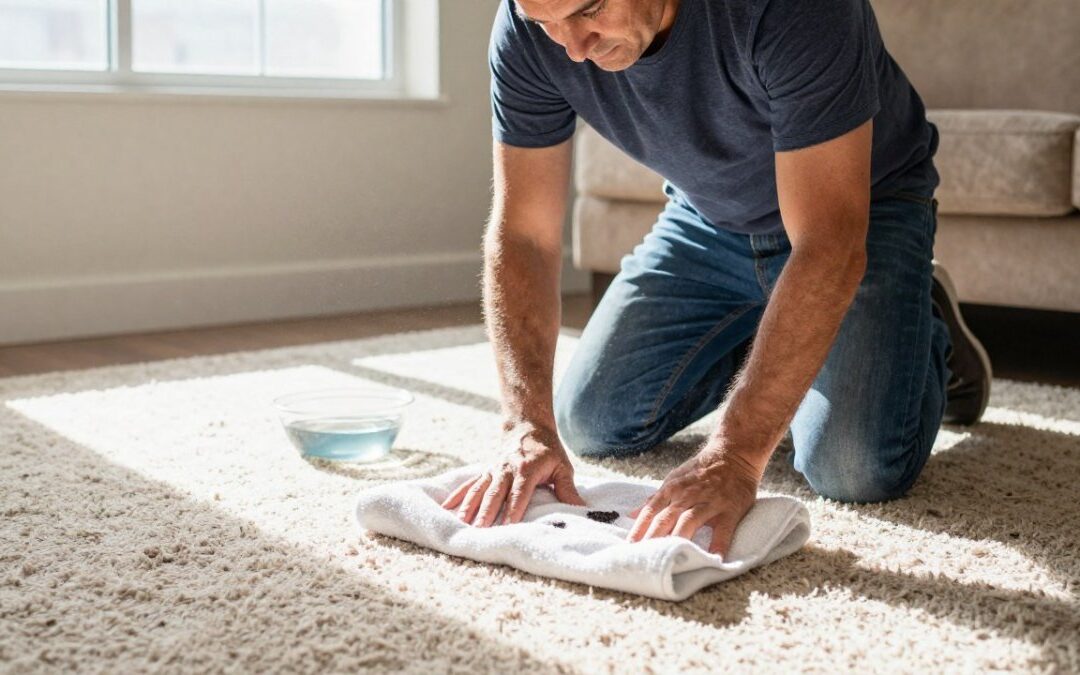
To remove deep carpet stains without chemicals, blot the spot with a clean cloth, then work it with mild household ingredients such as warm water, white vinegar, baking soda, or a few drops of plain dish soap. Apply them lightly, let them sit, then rinse and blot dry. Avoid scrubbing, since it pushes the stain deeper and frays the fibers.
- Blot firmly with a clean, dry cloth and avoid rubbing, which spreads the stain outward.
- Mix one cup of warm water with two tablespoons of white vinegar and spray lightly without soaking the carpet.
- Sprinkle baking soda over the spot, let it sit 15 to 20 minutes, then vacuum it up.
- Test any solution on a hidden spot first and wait a few minutes to check for color change.
- Keep water warm, not boiling, and give the area 6 to 12 hours to dry before judging the result.
Table of Contents
- Why Deep Carpet Stains Need a Different Approach
- How to Clean Carpet with Baking Soda and Vinegar
- How to Remove Old Stains from Carpet Using Gentle Methods
- How to Clean Carpet by Hand and Use Heat and Steam Safely
- Getting the Stain Fully Out and Knowing When to Call a Professional
- Scheduling Your Carpet Cleaning in Albuquerque
- Frequently Asked Questions
Deep carpet stains can feel impossible to lift, especially when you want to avoid harsh chemicals around kids, pets, or anyone with sensitive lungs. The good news is that many set-in stains respond well to simple household ingredients, patience, and the right technique. At 5 Stones Carpet Cleaning, we work with stubborn stains across the Albuquerque metro area, and a gentle, methodical approach is often the key to lifting them. This guide walks you through how to remove deep carpet stains without chemicals, what to avoid, and when it makes sense to call a professional.
Why Deep Carpet Stains Need a Different Approach
A surface spill is one thing. A deep stain has soaked past the carpet pile into the backing and padding, where it dries and bonds to the fibers. That is why a quick wipe rarely finishes the job.
Deep stains need three things: moisture to loosen them, gentle absorption to lift them out, and time to work. Scrubbing hard usually pushes the stain deeper and frays the fibers.
Choosing a Stain-Specific Method by Stain Type
Not every stain responds to the same ingredient. Match the method to the stain:
- Red wine or juice: Blot with cold water, then apply a vinegar-water mix
- Pet urine: Blot up moisture, then use a baking soda and vinegar treatment for odor
- Coffee or tea: Blot with cool water, then use a mild dish soap solution
- Grease or oil: Sprinkle baking soda, let it sit, then vacuum before washing
Always test any solution on a hidden spot, such as inside a closet, first. Wait a few minutes and check for color change.
How to Clean Carpet with Baking Soda and Vinegar
Baking soda and white vinegar are the most common natural cleaners, and they work well together for odor and light discoloration. Here is the process:
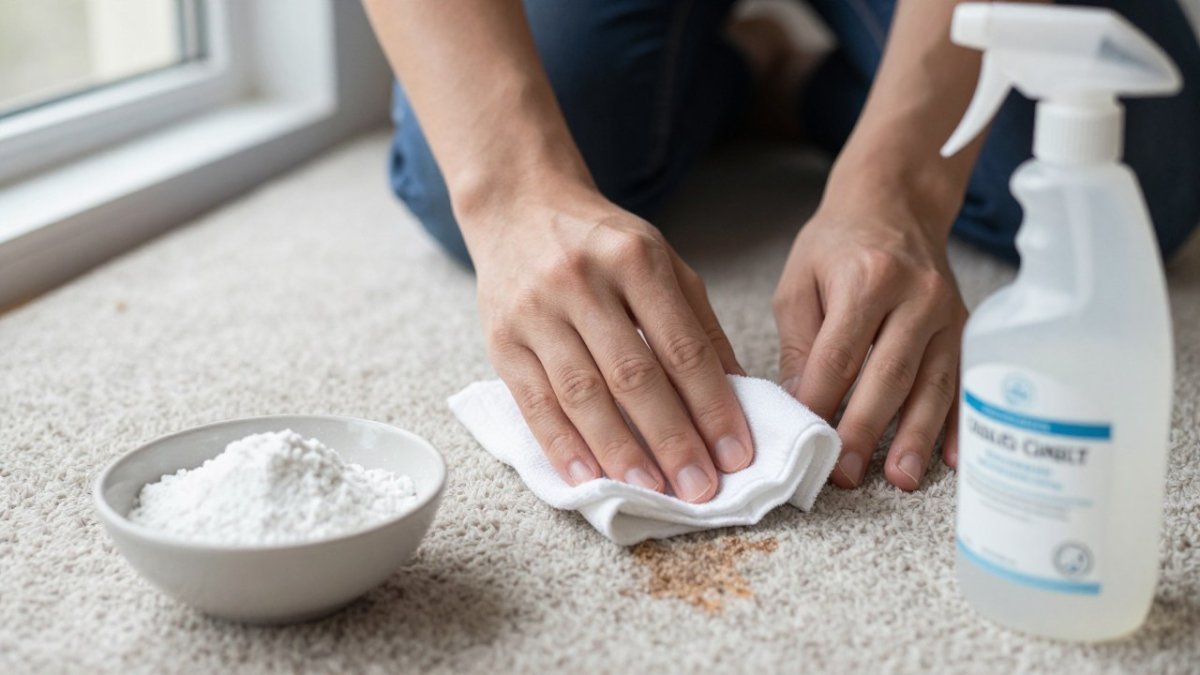
- Blot up as much of the stain as you can with a clean white cloth.
- Mix one cup of warm water with two tablespoons of white vinegar.
- Lightly spray the stained area. Do not soak the carpet.
- Sprinkle a thin layer of baking soda over the spot.
- Let it sit for 15 to 20 minutes so it can absorb the stain.
- Vacuum up the dried baking soda.
- Repeat if needed, then dab with plain water and blot dry.
Watch out: Too much vinegar or water can wick through to the padding and cause a musty smell. Use the smallest amount that gets the job done.
Blotting Before You Treat Anything
Blotting is the most important habit for any stain. If a spill is happening right now, see what to do first in an emergency. Press firmly with a clean, dry cloth, then lift. Rotate to a fresh section of the cloth as it fills. Rubbing spreads the stain outward and roughens the fibers, so keep your motion gentle and downward.
Here is a quick reference for the stain-specific methods covered in this guide.
| Stain type | First step | Then |
|---|---|---|
| Red wine or juice | Blot with cold water | Apply a vinegar-water mix |
| Pet urine | Blot up moisture | Baking soda and vinegar treatment |
| Coffee or tea | Blot with cool water | Mild dish soap solution |
| Grease or oil | Sprinkle baking soda | Let sit, then vacuum before washing |
How to Remove Old Stains from Carpet Using Gentle Methods
Old, set-in stains take more patience. Repeated light treatments are often a gentler option than one heavy one. A common approach is to:
- Apply a small amount of warm water with a few drops of plain dish soap
- Blot, then rinse by blotting with clean water
- Let the area dry fully before deciding whether to repeat
Heat can help loosen old residue, but use it carefully (see the next section).
How to Clean Carpet by Hand and Use Heat and Steam Safely
Hand cleaning works well for small areas and for carpets you do not want to soak. Use a soft-bristled brush, a clean toothbrush works for tight spots, and work in small circles with light pressure. Stop before the carpet looks soggy; the goal is damp, not wet.
What “Without Chemicals” Really Means
“Without chemicals” is shorthand, not chemistry. Water, vinegar, baking soda, dish soap, and salt are all chemicals. What most people mean by the phrase is avoiding harsh commercial stain removers, solvents, bleach, ammonia, and strong surfactants, especially around children, pets, and anyone with asthma or sensitive skin.
That framing matters because some “natural” ingredients are not automatically gentle. Hydrogen peroxide can bleach or lighten carpet dye. Borax is a respiratory and ingestion concern around pets and children and should not be left in the pile. Essential oils can irritate skin and are toxic to cats (Is the Latest Home Trend Harmful to Your Pets? What You Need to Know!).
Safe Use of Heat and Steam
Heat helps because warm water dissolves residue faster than cold. But heat also sets some stains, protein stains like blood, dairy, and egg, and tannins in coffee and tea, and can shrink, felt, or distort wool and other natural fibers. A few practical limits:
- Keep water warm, not boiling. A common working range is roughly 100-120°F, warm to the touch, not steaming.
- Never leave a steamer or hot-water tool in one spot. Keep it moving, and keep the head at least a few inches from the backing.
- Do not steam wool, silk, viscose, or unknown fibers without checking the manufacturer’s care label first.
- Do not steam a stain you have not identified. If it might be blood, dairy, egg, or coffee, use cool water first.
- Ventilate the room and keep pets and children off the carpet until it is fully dry.
Watch out: Steam and hot water can drive moisture into the backing and padding, where slow drying creates a musty smell or, over time, mold. Run a fan or open windows, and give the area 6-12 hours to dry before judging the result.
Drying and Residue
Residue is the most common reason a “clean” spot looks dirty again a week later. Soap left in the pile attracts soil. After any treatment, blot with clean water until the cloth comes up clean, then blot dry with a white towel and weight it down for a few minutes. A fan or a dehumidifier speeds drying and reduces wicking. If a ring appears as the carpet dries, that is wicking, repeat a light rinse-and-blot rather than adding more solution.
Getting the Stain Fully Out and Knowing When to Call a Professional
You will know the stain is gone when the area looks the same color as the surrounding carpet, feels clean to the touch, and has no lingering odor after drying. If the spot is still visible after several careful attempts, or if the carpet smells of urine even after treatment, stop. You can book professional truck-mount carpet cleaning in Albuquerque when home methods have not lifted the stain.
Call a professional when the stain covers a large area, has soaked into the padding, or keeps coming back. Professional truck-mount extraction removes moisture and residue that home methods cannot reach. Our team at 5 Stones Carpet Cleaning uses pet- and people-safe cleaning products, and we offer free estimates. If the stain is on upholstery, this guide covers cleaning upholstery safely at home. For current prices, please visit our pricing page.
Scheduling Your Carpet Cleaning in Albuquerque
If you have tried home methods and the stain is still there, or if you have pets and need a thorough deep clean, schedule a visit with our team. We are a family-owned, faith-based company, and we pride ourselves on responsive service. We would be glad to help you too. Book online through our website, and we will be glad to help.
Last Updated: November 19, 2026
Frequently Asked Questions
Does baking soda remove deep carpet stains?
Baking soda works best as an absorbent and deodorizer rather than a true stain remover. Sprinkle it over a damp stain, let it sit for several hours or overnight so it pulls moisture and odor out of the fibers, then vacuum it up thoroughly. For deep stains, repeat the process a few times. Test any mixture on a hidden area first, since some carpet dyes are sensitive to moisture and pH changes.
Can vinegar and baking soda damage carpet?
Used in moderation, white vinegar and baking soda are generally safe for most synthetic carpets, but over-wetting is the real risk. Soaking the backing can cause wicking, residue, mildew, or delamination. Use a light spray, blot rather than scrub, and rinse with a damp cloth. Always patch test on an inconspicuous spot and allow the area to dry fully, ideally with fans running, before walking on it.
Should you blot or scrub a carpet stain?
Always blot. Scrubbing pushes the stain deeper into the carpet fibers and can fray or distort the pile. Press a clean white cloth or paper towel firmly onto the stain and lift, working from the outside edge toward the center. Replace the cloth as it picks up color. Blotting lifts liquid and pigment out of the carpet, which is the goal for deep stains.
How do you clean a carpet by hand without a machine?
Mix a small amount of mild dish soap into warm water, dampen a clean cloth, and work in small sections. Dab the solution onto the stain, then blot with a dry cloth to lift it. A soft-bristled brush can loosen dried residue, used gently in the direction of the pile. Rinse by blotting with plain water, then dry the area completely with fans or a dehumidifier to prevent mildew and residue.
