
Quick Summary
The best way to clean upholstery at home starts with the care code on the tag, which says whether the fabric can take water, solvent, or neither. Vacuum first, then blot gently with a damp cloth or light foam, never a soaked one, and let the fabric dry fully.
- Find the W, S, WS, or X care code before using any cleaner.
- Vacuum thoroughly with the upholstery attachment to remove loose dirt first.
- Use a light foam made from mild dish soap, not a wet cloth.
- Blot stains gently, because rubbing pushes dirt deeper into the weave.
- Dry the fabric fully, since trapped moisture can cause mildew.
Table of Contents
- Check the Care Code Before You Touch the Sofa
- Vacuum and Prep the Upholstery
- Best Way to Clean Upholstery at Home Without a Machine
- Best Homemade Upholstery Cleaner and How to Mix It
- How to Clean an Upholstered Chair by Hand, Step by Step
- How to Deep-Clean a Fabric Sofa at Home
- Booking Help for Stains, Odors, and Pet Accidents
- Frequently Asked Questions
Check the Care Code Before You Touch the Sofa
Last Updated: November 2, 2026
Doing clean upholstery at home goes wrong most often for one reason: people skip the label. The care code tells you which cleaning methods are safe for that exact fabric, and ignoring it can shrink, stain or bleed a sofa. Before you reach for any spray, find the tag under the cushion or on the back of the frame.
Most upholstery labels use one of four letter codes. Each one tells you what the fabric can handle, and each one rules out specific methods. Use the code as a gate: pick your method from the code first, then choose a product.
What the W, S, WS, and X Labels Mean
- W: Water-based cleaners only. Water-based foam, mild dish soap solutions and most upholstery shampoos are safe. Solvents, dry-cleaning fluids and alcohol-based spot removers are not.
- S: Solvent-based cleaners only. Water can leave rings, water marks or shrinkage. Use a solvent spot remover or a dry-cleaning solvent, and never a water-based spray.
- WS: Either a water-based or a solvent-based cleaner is safe. This is the most forgiving code, but it still does not mean soak the fabric.
- X: Do not wet clean at all. Vacuum only, or call a professional. Water or any liquid cleaner can permanently stain or distort an X-coded fabric.
Care-Code Decision Guide
| Code | Safe methods | Methods to avoid | Best first step |
|---|---|---|---|
| W | Water-based foam, mild soap solution, upholstery shampoo | Solvents, alcohol, dry-cleaning fluid | Vacuum, then blot with damp foam |
| S | Solvent spot remover, dry-cleaning solvent | Water, water-based sprays, steam | Vacuum, then spot-test solvent on a hidden area |
| WS | Water-based or solvent-based cleaners | Soaking, over-wetting | Vacuum, then choose the gentler water-based method first |
| X | Vacuum only, professional dry cleaning | Water, solvents, steam, any liquid | Vacuum and book a professional |
Many people think an X label is a minor warning. It is not. Water or a cleaner can permanently stain or distort an X-coded fabric, so treat it as a hard stop for DIY cleaning.
Watch out: A W label does not mean you can soak the fabric. Too much water can cause shrinking, mildew or water marks, so use a damp cloth, never a wet one.
When the Label Is Missing or Unclear
Tags fall off, fade, or sit under a stapled deck. If you cannot read the code, treat the fabric as if it were S or X until you know better. Do a spot test on a hidden area before cleaning the whole piece: the underside of a seat cushion, the back of the sofa, or a section covered by a skirt works well. Apply a small amount of your chosen cleaner, wait 10 to 15 minutes, and check for color transfer, ringing or texture change. If the cloth picks up dye or the fabric puckers, stop and switch methods.
Some labels combine codes or add a cleaning instruction in words, such as “dry clean only” or “spot clean with water-based cleaner.” Follow the written instruction over the letter code when the two disagree, and when in doubt, choose the gentler method. A professional cleaner can often identify the fabric from a sample or a photo before you commit to a full DIY clean.
Vacuum and Prep the Upholstery
Start by removing loose dust, crumbs and pet hair. Dirt that stays on the surface gets pushed deeper into the fabric when you add water. A thorough vacuum makes every later step work better.
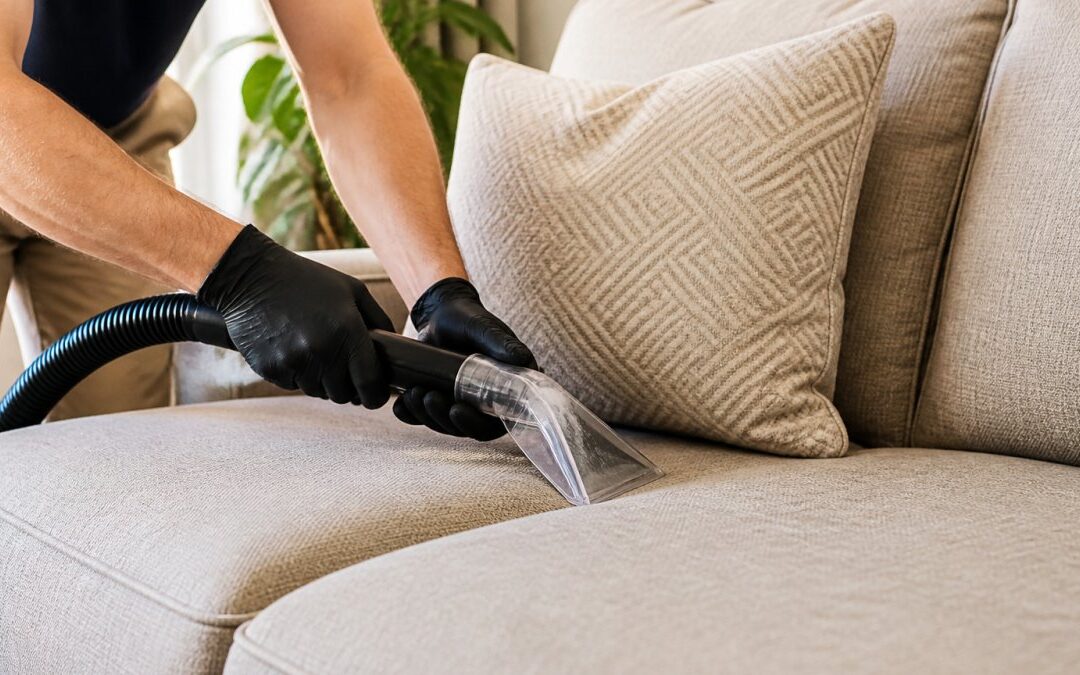
Use the upholstery attachment on your vacuum, not the hard floor head. Work slowly along the seams, crevices and the gap between the cushions. These areas hold the most grit.
Remove any removable covers and cushions first. Check the manufacturer’s instructions on each one before you wash it.
A soft-bristled brush helps lift embedded pet hair. Brush in one direction, then vacuum again.
Best Way to Clean Upholstery at Home Without a Machine
You do not need a rented extractor to clean most upholstery well. For light to moderate dirt on a W or WS fabric, a hand method works and avoids soaking the foam.
Mix a small amount of mild dish soap into warm water, then whip it into a light foam. Dip a white microfiber cloth into the foam, not the liquid, and wring it until it is only damp.
Work one small section at a time. Blot the area gently. Rubbing pushes dirt deeper and can fray the weave.
Rinse your cloth often in clean water and wring it out. Go back over the area with a dry cloth to lift leftover moisture.
Let the fabric air-dry fully before you sit on it. Open a window or run a fan to speed drying, since trapped moisture can cause mildew.
Best Homemade Upholstery Cleaner and How to Mix It
A simple homemade cleaner handles most everyday messes. Many people use a mix of water, white vinegar and a few drops of dish soap in a spray bottle. Vinegar helps cut grime, but it can dull some dyes, so always test first.
Mix one cup of warm water, one tablespoon of white vinegar and a few drops of clear dish soap. Shake gently to combine. Avoid adding too much soap, since it can leave a sticky residue that attracts more dirt.
Never spray the cleaner directly onto the fabric. Spray a cloth lightly, then blot the stain.
For a solvent-safe (S) fabric, do not use this water-based mix. Rubbing alcohol is a common solvent option for small spots, but it must be tested first because it can strip color.
Watch out: Mixing bleach with vinegar or ammonia creates harmful fumes. Never combine cleaners in one bottle.
How to Clean an Upholstered Chair by Hand, Step by Step
Armchairs and dining chairs are smaller, so they are often easier to clean by hand than a full sofa. Work through them in this order.
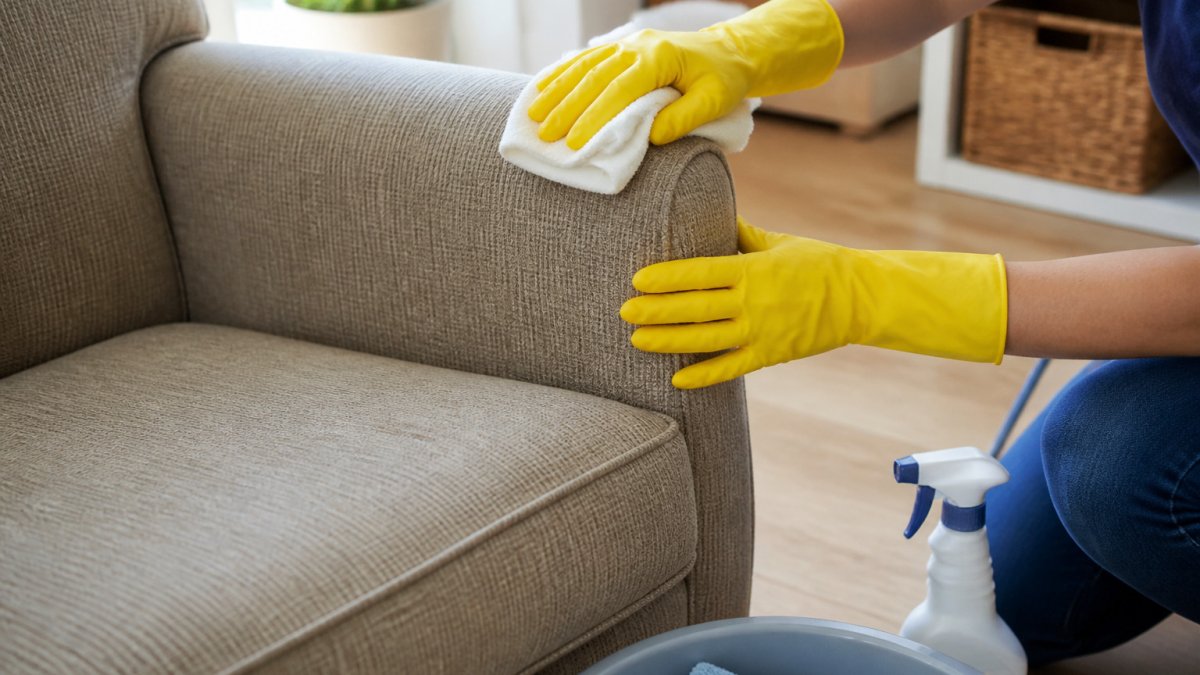
- Vacuum the chair thoroughly, including under the cushion and along the seams.
- Check the care code and do a spot test on the underside.
- Mix your cleaner or foam as described above.
- Dampen a cloth and blot the first small section.
- Lift the stain by blotting, then rinse your cloth and blot again.
- Move to the next section and repeat until the whole chair is done.
- Dry with a clean, dry cloth, then let it air-dry for several hours.
Good airflow shortens drying time.
How to Deep-Clean a Fabric Sofa at Home
A deep clean takes more time and more care than spot cleaning. Plan for a full afternoon and clear the room of pets and children while the sofa dries.
Start with a thorough vacuum and remove all cushions. Clean the frame and legs separately, since they collect dust that drops onto the fabric. Vacuum both sides of each cushion and the deck under them, because grit trapped in the seams works its way into the foam once moisture is added.
Match the Method to the Fabric
Deep cleaning is where fabric type matters most. The same technique that rescues a microfiber sectional can ruin velvet or linen.
- Microfiber: Usually W or WS coded. A damp microfiber cloth and a mild water-based foam work well. Brush the nap back in one direction after cleaning so the finish stays even.
- Velvet and velour: Often S coded. Water can crush the pile and leave marks. Use a solvent spot remover for spots and a professional for full cleaning. If you must refresh the pile, use a soft brush and light steam from a distance, never a wet cloth.
- Linen and cotton blends: Often W or WS coded but prone to shrinkage and water rings. Use foam rather than liquid, work in small sections, and dry quickly with airflow.
- Leather and faux leather: Not wet cleaned like fabric. Wipe with a damp cloth and a pH-neutral leather cleaner, then condition. Never soak seams or use steam.
- Delicate blends, silk and wool: Treat as S or X unless the label says otherwise. These are the fabrics most likely to bleed dye or distort, and they are the strongest case for professional cleaning.
If you use a handheld steamer, keep it moving and hold it several inches away. Heat can damage velvet, silk and some synthetics. Check your care code first.
Work in small sections across the whole sofa so the color stays even. Blot each section after treating it and rinse your cloth often. Overlap your sections slightly so you do not create clean patches next to dirty ones.
Dry It Fast and Dry It Fully
Drying is half the job. A sofa that stays damp for a day or more can develop odor, mildew or water marks, and the foam holds moisture far longer than the surface fabric feels wet.
- Open windows and run a fan or two pointed at the sofa. Air movement matters more than heat.
- Run a dehumidifier in the room if the weather is humid or the room is closed up.
- Keep cushions upright and separated so air reaches every side, and flip them partway through drying.
- Expect the foam to take a while longer to dry than the surface fabric. Do not reassemble or sit on the sofa until the foam is dry.
- Blot any water marks while the fabric is still damp; once they dry in, they are much harder to lift.
Keep People and Pets Safe During and After Cleaning
Residue and damp foam are the two things to manage in a home with children, pets or sensitivities. Use the least amount of cleaner that does the job, rinse with a clean damp cloth so no sticky film remains, and ventilate the room while you work. Keep children and pets off the furniture until it is fully dry, not just dry to the touch, because wet foam can harbor odor and mold. If anyone in the home is sensitive to fragrance or solvents, choose a fragrance-free cleaner and test it in a hidden area first.
Watch out: Stop the DIY process and call a professional if the fabric is X-coded, if the sofa smells strongly of pet urine, if you see mold, if the dye transfers to your cloth during a spot test, or if a stain has not lifted after two gentle attempts. Deep odors and mold often sit in the foam, and home methods rarely reach them. Delicate fabrics, persistent stains and any sign of color transfer are the point where professional equipment and knowledge save you from a costly mistake.
Booking Help for Stains, Odors, and Pet Accidents
Some messes are too deep or too stubborn for home methods. Old pet urine, large grease stains and set-in wine often need professional equipment.
If you are dealing with an old pet accident on a sofa or chair, our upholstery cleaning services can help. For urine odor that has spread into carpet or padding, our guide on how to remove old pet urine smells from carpet explains why odors return and what to do about them.
Our team at 5 Stones Carpet Cleaning serves the Albuquerque metro area, and you can book online to get the upholstery cleaned the right way.
Frequently Asked Questions
What is the best way to deep clean upholstery?
The most reliable method is a controlled, low-moisture process: vacuum thoroughly, spot test a hidden area, apply a small amount of cleaner to a cloth rather than the fabric, work in small sections with gentle blotting, and rinse lightly with a damp cloth. Allow the fabric to dry fully in a ventilated room, usually several hours. Avoid soaking the foam beneath the cover, since trapped moisture causes water marks and mildew. For heavy soil, a professional cleaner can use specialized equipment.
Can I use Dawn dish soap to clean upholstery?
A small amount of mild dish soap diluted in warm water can lift everyday grime from many fabrics, but it must be used sparingly. Mix about one teaspoon of soap into a quart of water, whip it to a light foam, and apply only the foam with a cloth. Dish soap left in fabric attracts dirt faster and can leave a stiff residue, so rinse with a clean damp cloth afterward. Always spot test first, and skip it entirely on silk, leather, or any fabric labeled W-only or X.
What is the best homemade cleaner for upholstery?
For most washable-code fabrics, a mix of one part white vinegar, one part water, and a few drops of mild dish soap works well for general soil. Rubbing alcohol can help with ink and some oily marks but can discolor dyes, so test it first. Keep the solution light, apply it to a cloth rather than soaking the fabric, and avoid making the mixture too strong, since residue is the most common cause of quick re-soiling.
How do you clean upholstery by hand?
Vacuum first with an upholstery attachment, then dampen a soft cloth with your chosen cleaner and wring it until barely wet. Wipe in one direction with light pressure, working a small section at a time and blotting stains instead of rubbing. Follow with a clean damp cloth to remove residue, then dry with a towel and let air circulate. Hand cleaning suits light soil and spot treatment; heavily soiled sofas usually need a deeper method.
