
Last Updated: November 7, 2026
Quick Summary
To remove stubborn pet odors from carpet, find the source first: urine usually soaks past the fibers into the backing and pad, so surface cleaning alone won’t work. Treat the spot with an enzymatic cleaner applied deep enough to reach the same depth the urine did, give it full dwell time, and repeat if needed. If the smell returns, the pad or subfloor likely needs treatment or replacement.
- Sniff along baseboards and furniture legs, and check for dark rings or stiff patches.
- Blot fresh messes with thick towels and never rub, since rubbing pushes urine deeper.
- Enzymatic cleaners need moisture and dwell time, often 10 minutes to several hours.
- Old stains may need two or three rounds before the smell fades.
- Never mix enzymatic cleaners with bleach, which kills the enzymes and can create dangerous fumes.
Table of Contents
- Find the Odor Source Before You Clean
- Step-by-Step: Remove Fresh Pet Odors From Carpet
- How to Get Old Urine Smell Out of Carpet
- The Best Pet Odor Eliminator for Carpet (and How to Use It)
- How to Get Dog Smell Out of Carpet Naturally
- Why Carpet Still Smells Like a Dog After Cleaning
- Book a Deep-Clean With 5 Stones Carpet Cleaning
- Frequently Asked Questions
Find the Odor Source Before You Clean
If you want to know how to remove stubborn pet odors from carpet, start by finding where the smell actually lives. Most pet odors in carpet come from urine that soaked past the carpet fibers into the backing and pad. Cleaning the surface alone won’t fix that.
Carpets often look clean on top while the pad underneath still holds the odor. The smell tends to come back until the source is treated.
Here’s how to track it down:
- Use your nose on your hands and knees. Get low and sniff along baseboards, furniture legs, and doorway edges. Pet urine wicks outward and downward.
- Check for dark rings or stiff patches. Dried urine leaves a crusty feel and a slight color change, even on darker carpet.
- Press a damp white cloth into suspect spots. A faint yellow tint or ammonia smell on the cloth confirms urine.
- Look for old accident patterns. Dogs and cats often return to the same corner, so check near doors, under windows, and beside furniture.
The Environmental Protection Agency’s indoor air quality guidance notes that damp materials and lingering odors can affect indoor air, which is one more reason to find the source instead of masking it.
Check the Carpet Pad and Subfloor
Lift a corner of the carpet near the smell. If the backing or pad is damp, stained, or smells strong, the contamination has soaked through. Pad is like a sponge, and once urine reaches it, surface cleaning can’t reach the bacteria causing the odor.
In practice, this means a spray bottle and a rag won’t cut it. You may need to pull back the carpet, replace the pad, and treat the subfloor with an enzyme product or a sealant before reinstalling.
Step-by-Step: Remove Fresh Pet Odors From Carpet
Fresh messes are the easy ones, so act fast. The goal is to lift as much liquid as possible before it soaks down into the carpet pad.
- Keep pets and kids away. Block the area until it’s fully dry.
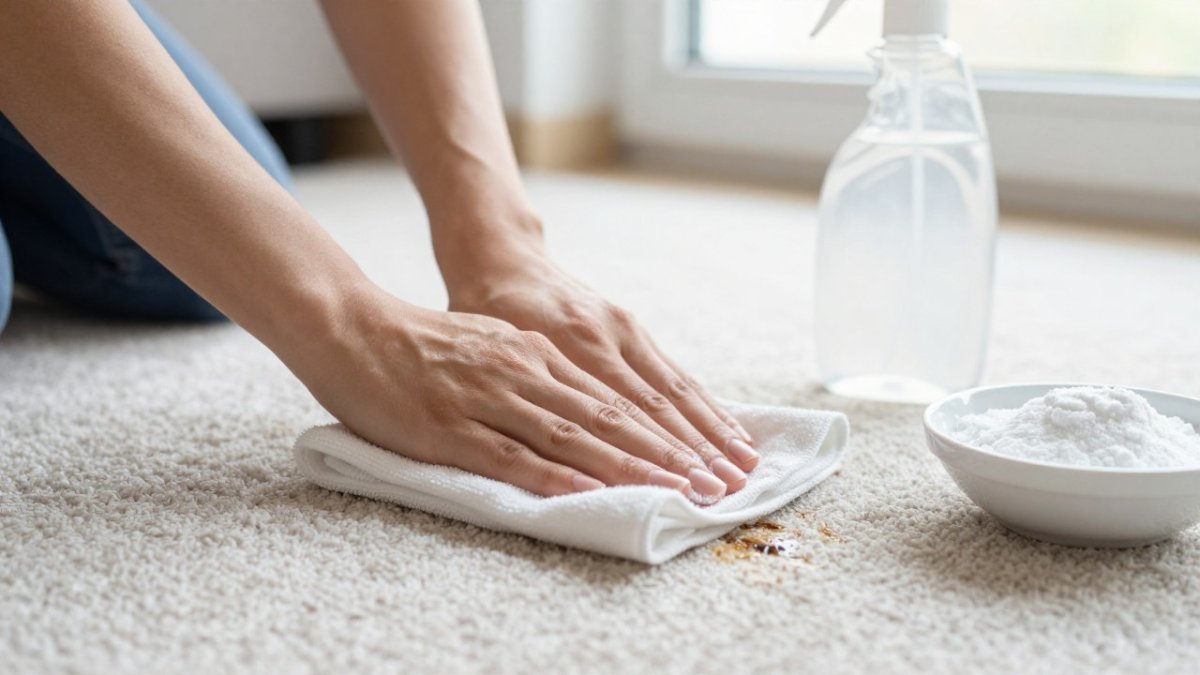
- Blot up liquid first. Press a thick layer of paper towels or a white cloth into the mess. Stand on it to push the liquid up. Do not rub, since rubbing spreads the stain and pushes urine deeper.
- Pick up solids with a bagged glove or paper towel. Bag and toss them, then blot the spot.
- Rinse with cool water. Pour a small amount of water on the spot, blot again, and repeat until the towels come up clean.
- Apply an enzymatic cleaner. These products use enzymes to break down odor compounds rather than cover them. Follow the label, and give it the full dwell time.
- Let it air dry completely. Turn on a fan or open a window. Damp carpet invites odor recurrence.
Blot, Rinse, and Neutralize
Blotting is the step most people rush, and it’s the step that matters most. Push down hard and use fresh towels as each one soaks through. Rinse with plain water between rounds so you lift residue, not just spread it.
For neutralizing, an enzymatic cleaner does the heavy lifting. These products contain bacteria and enzymes that eat the proteins in urine. They need time to work, usually several hours to a full day depending on the label. Covering the spot with a towel while it dries can help the enzymes stay active.
How to Get Old Urine Smell Out of Carpet
Old urine smell is harder because the urine has dried and bonded to the carpet fibers and pad. You can’t just blot it away, since there’s no liquid left to lift. The dried crystals reactivate every time humidity rises, which is why the smell seems to come and go.
Here’s the approach that works:
- Rehydrate the spot first. Mist it lightly with water and cover it with a damp towel for a few hours. This loosens the dried urine so a cleaner can reach it.
- Use an enzymatic cleaner with a long dwell time. Apply it generously and let it sit, sometimes up to 24 hours for deep-set stains.
- Repeat the treatment. Old stains often need two or three rounds before the smell fades.
- Check the pad. If the smell returns after drying, the pad is likely saturated and needs to come out.
For a deeper walkthrough on old stains, see our guide on how to remove old pet urine smells from carpet. It covers the pull-back method and pad replacement in more detail.
The Best Pet Odor Eliminator for Carpet (and How to Use It)
The best pet odor eliminator for carpet is an enzymatic cleaner, not a masking spray. Enzymatic cleaners contain enzymes and beneficial bacteria that break down the uric acid crystals in urine. Once those crystals are gone, the smell source is gone too.
Here is how to use one correctly:
- Clean the area first. Enzymes can’t reach urine buried under dirt or old cleaner residue. Blot and rinse with plain water, then let the surface dry enough that the product can penetrate.
- Apply enough product to soak the spot. A light mist won’t reach the backing. For a fresh surface accident, a light mist may be enough; for urine that has soaked into the pad, you need to saturate the spot so the product reaches the same depth the urine did. This is the step most people get wrong.
- Give it dwell time. Read the label and wait the full time, often 10 minutes to several hours. Deep contamination may need the longer end of that range.
- Keep the area damp while it works. Mist with water if it starts to dry out. Enzymes need moisture to stay active, and a spot that dries too fast stops working before it finishes.
- Let it air dry, then check the smell. If odor remains, repeat. Old or deep stains often need two or three rounds.
Why some enzyme cleaners fail: Surface-only directions are written for surface accidents. When urine has reached the pad, a surface mist leaves the deepest contamination untreated, and the smell returns as humidity rises. A common pattern is a spot that smells clean for a few days and then reappears.
Watch out: Never mix enzymatic cleaners with bleach or other harsh chemicals. Bleach kills the enzymes and can create dangerous fumes. Use one product at a time and rinse between treatments. Keep pets and children away until the area is fully dry, and follow the label’s guidance on carpet type, since some products are not intended for wool or natural fibers.
How to Get Dog Smell Out of Carpet Naturally
If you want to get dog smell out of carpet naturally, white vinegar and baking soda are the two workhorses. Neither is as strong as an enzyme cleaner for deep urine, but they handle surface odors and freshen the carpet well. The difference between a natural treatment that works and one that leaves a sticky residue or a damaged carpet comes down to how you apply it and what your carpet is made of.
White vinegar and water: Mix equal parts white vinegar and cool water in a spray bottle. Lightly spray the affected area, let it sit for a few minutes, then blot dry. Vinegar helps neutralize the alkaline compounds in urine.
Baking soda: Sprinkle a generous layer of baking soda over dry carpet, let it sit for several hours or overnight to absorb odors, then vacuum thoroughly. This works well for general pet smell, not deep stains. Use a thin, even layer rather than a thick pile, and vacuum with a machine that has strong suction.
Match the treatment to the carpet material:
- Synthetic carpet (nylon, polyester, olefin): The most forgiving. Vinegar solution and baking soda are generally safe, but rinse and dry thoroughly to avoid residue that attracts dirt.
- Wool and natural fibers: More sensitive to acids and to over-wetting. Spot-test vinegar solution in a closet or corner first, use it more dilute, and avoid leaving baking soda down for extended periods.
- Delicate or low-moisture carpets (including some loop and Berber styles): Excessive liquid can wick into the backing and cause buckling or prolonged dampness. Use the smallest amount of moisture that lifts the odor and dry with a fan.
Watch out: Never mix vinegar and baking soda directly in a spray bottle, since they cancel each other out, and never combine either with bleach or ammonia. Keep pets and children off the treated area until it is completely dry, and ventilate the room while vinegar odor is present.
For dog smell that’s soaked into furniture too, professional upholstery cleaning services can reach cushions and mattresses that home methods miss.
Why Carpet Still Smells Like a Dog After Cleaning
Carpet still smells like a dog after cleaning when the odor source wasn’t fully removed. The most common reasons:
- The pad was never treated. Surface cleaning leaves urine in the pad, and the smell returns as it dries.
- The wrong product was used. Masking sprays and detergents cover odor for a while but don’t break down the compounds causing it.
- The carpet stayed damp. Trapped moisture grows bacteria and mold, creating a new smell.
- The subfloor was missed. Urine can soak into wood or concrete beneath the pad.
- The cleaner didn’t reach the backing. A quick pass with a machine won’t pull contamination out of deep fibers.
If you’ve cleaned twice and the smell is still there, the contamination has likely gone below the surface. That’s the point where DIY methods hit their limit.
When the smell lingers after cleaning, these are the usual culprits.
| Problem | Cause | Fix |
|---|---|---|
| Smell returns after drying | Pad was never treated | Treat or replace the pad |
| Odor covered, not removed | Masking sprays and detergents used | Use an enzymatic cleaner |
| New musty smell | Carpet stayed damp | Air dry completely with a fan |
| Smell persists from below | Subfloor was missed | Treat wood or concrete beneath pad |
| Deep fibers still contaminated | Cleaner didn’t reach the backing | Saturate so product reaches same depth |
Book a Deep-Clean With 5 Stones Carpet Cleaning
When home treatments stop working, professional cleaning can help reach the pad and backing.
5 Stones Carpet Cleaning is a family-owned, faith-based company serving the Albuquerque metro area since 2012. We use people and pet-safe cleaning products, so you don’t have to worry about your pets or kids after we leave. Our team uses professional equipment to clean carpet fibers and the backing, not just the surface.
Here’s what you get:
- Pet-safe cleaning products for homes with dogs, cats, and kids
- Free estimates so you know the cost before we start
- Satisfaction guaranteed work
- Responsive scheduling, including short-notice help for accidents and turnovers
You can see our carpet cleaning services and what a deep clean includes, or contact our team to ask about scheduling and current hours.
If your carpet still carries that smell after everything you’ve tried, don’t keep pouring money into sprays that don’t work. Call 5 Stones Carpet Cleaning and let a team with the right equipment and pet-safe products handle it. Get started with 5 Stones Carpet Cleaning and get your home smelling fresh again.
Frequently Asked Questions
How do I remove extreme pet odor from carpet that has been there for months?
Old, set-in pet odors usually mean urine has soaked through the carpet into the pad and sometimes the subfloor. Start by pulling back a corner of the carpet to inspect the backing and pad. If the pad is saturated, it often needs to be replaced. For the carpet itself, apply an enzymatic cleaner, let it dwell for the full label time (often 10-30 minutes), then blot and air dry. Repeat if the smell lingers. If the odor returns after two or three treatments, the contamination is likely below the carpet and needs professional extraction.
What do professionals use to get urine smell out of carpet?
Professional cleaners typically use high-flow hot-water extraction machines combined with enzyme-based pre-treatments. The key difference is the volume of water and suction: truck-mounted units flush contamination out of the carpet fibers and pad far more thoroughly than a rental machine. They also use sub-surface tools to reach the pad without pulling up the carpet. For severe cases, they may apply an encapsulating treatment that neutralizes odor compounds rather than masking them. A company like 5 Stones Carpet Cleaning uses people- and pet-safe products for this process.
Why does my carpet still smell like a dog after cleaning?
The most common reason is that the odor source was never fully removed. Surface cleaning can leave urine or odor compounds trapped in the carpet pad, tack strip, or subfloor. Another cause is over-wetting: if the carpet stays damp too long, mildew can develop and create a musty smell that mimics pet odor. Finally, some cleaners use masking fragrances that fade and reveal the original smell. If the odor returns within a few days of cleaning, the contamination is likely deeper than the carpet surface.
Can baking soda alone remove stubborn pet odors from carpet?
Baking soda is useful as a first step because it absorbs surface moisture and some odor, but it cannot neutralize the uric acid crystals in pet urine. For fresh accidents, blot up as much liquid as possible, sprinkle baking soda generously, let it sit for several hours or overnight, then vacuum. For old or set-in odors, baking soda needs to be paired with an enzymatic cleaner that breaks down the odor compounds. On its own, baking soda will reduce the smell temporarily but won’t eliminate the source.
